
Would George Have Supported Sortition?
Starting a Fandom for the Random!

On Tuesdays, I’ve been talking tariffs. I’ve been livestreaming while reading through George’s 2nd most famous book:
PROTECTION or FREE TRADE
An exmination of the tariff question,
with especial regard to the interests of labor
(Published in 1886, which was 7 years after Progress & Poverty, which also has a really long subtitle)
You can tune in here or at Twitch.tv/LandValueTaxMax at 6 pm Pacific.
Turns out that George opposes tariffs and suports free trade, but George’s free trade is only possible if we have the Land Value Tax. If you want all the nuance, you can read the book(s) yourself, tune in on Tuesdays, or, really, try writing an essay on George’s views yourself!
Today, which is a Sunday, I want to talk sortition.
So. If you’re unfamiliar with sortition, I’ll give a definition and make some arguments on its behalf. Then we’ll see if we can find some things George says that might indicate that maybe, just maybe, he could have been persauded of sortition.
Sortition is the formation of leglistive bodies by lot.
https://en.wikipedia.org/wiki/Sortition
(Note that service would be optional, compensated, and terminal.)
You could think of this as like…California selecting 500 random people to talk about whether or not the state should give LA, the city, the $2 billion they’re asking for because of the fires.
Or as LA, the city, selecting 500 random people to talk about whether or not to extend metro transit service, since traffic sucks and the olympics are approaching.
If you think this sounds like a souped-up jury duty, you’re right. If you don’t like jury duty, let me stress some differences! Sortition would not allow for “packing the jury”, since there’s no voir dere/peremptory challenge/bullshit. As noted earlier, it would also pay you a reasonable wage for your time—unlike jury duty. It would be optional—unlike jury duty. Finally, for the needs of most sortition bodies, it would not disrupt your work week, since meetings would be scheduled weekly on weekends or evenings—unlike jury duty.
The form of sortition I support would be a multi-body structure, something like what Terry Bouricius outlines here.
Yes, this is a very radical idea and yes, some crazy people would be randomly selected, but yes, I still think it is the best and fairest way to represent the opinions and desires of a large population. My trust in sortition relies on an understanding of “sampling” in mathematics and finding electoral polictics nauseating. I believe that sampling is the only method to provide representation of old, young, rich, poor, fat, happy, ugly, beautiful, black, white, red, blue, green, and purple. Of Introverts, extroverts, those who claim introvert/extrovert is a false binary, religious people, weird people, cool people, and people people.
What have we got to lose? Do we not all find modern politics nauseating?
I will toss elections a bone. I think that elections are superior to bloodline aristocracies, but that’s about it.
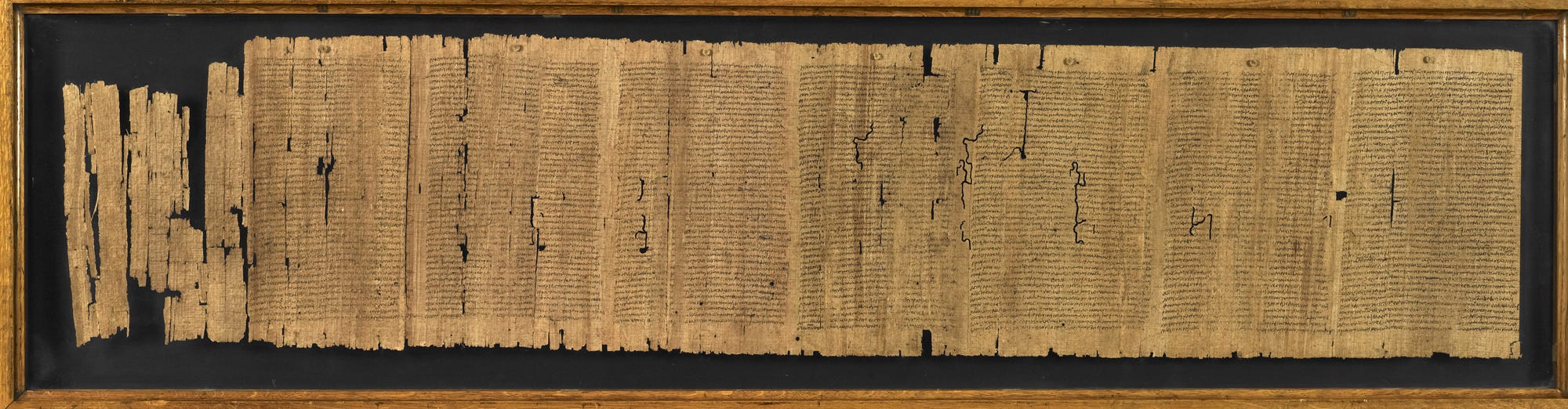
I will toss my founding fathers a bone. They had no way of knowing about the use of sortition in Athenian democracy, since it was lost to time until Aristotle’s scroll was found in Egypt in 1889 or something. I can’t give the founding fathers a full pardon, since sortition had been used in Venice (13th century), Florence(15th century), and Switzerland (17th-19th centuries). Rousseau and Montesquieu said something like sortition was required, if you believed in democracy and truly representing the people. The founding fathers though, weren’t committed to democracy. They wanted a representative government that used elections so that we might be ruled by a natural artistocracy.
They feared mob, people make snap decision based on highly emotional rhetoric, which, from another standpoint, you might call rational ignorance.
Maybe 250 years ago I would have been convinced that elections result in the best and brightest leading us towards the greatest good, but THE RESULTS ARE IN and ELECTED POLITICIANS ARE TERRIBLE.
(Hmm, possible book title? “The Results Are In: Elections Suck”)
Alright, with my description and general motivations for sortition complete, we will return to George.
As far as I know, George never discusses sortition. He probably thought about it even less than the founding fathers, if he’d heard of it at all. Nonetheless, here are some passages from Protection or Free Trade that makes me wonder what George might think, if he had the 20th century history and the theory of sortition laid bare before him.
Quick reminder though, remember, the idea of sortition is to take a random selection of people…commoners, lords, butchers, bakers, candlestickmakers, then give them time, resources, and a civic responsibility to think and decide on a course of action. It is trying to implement the representation and justice of direct democracy when the town is only a few hundred people. It is not a straw poll on Facebook, it is a mimicking what a group of people who crash landed on a desert island might do.
Ok, maybe the people who crash landed would be acting in a state of extreme stress, so that’s not the best analogy. But maybe that is life. Maybe we’re just humans who crash landed on Earth!!!
Anyway.
In Chapter I: INTRODUCTORY
Under all forms of government the ultimate power lies with the masses. It is not kings nor aristocracies, nor land-owners nor capitalists, that anywhere really enslave the people. It is their own ignorance. Most clear is this where governments rest on universal suffrage. The workingmen of the United States may mould to their will legislatures, courts and constitutions. Politicians strive for their favor and political parties bid against one another for their vote. But what avails this? The little finger of aggregated capital must be thicker than the loins of the working masses so long as they do not know how to use their power. And how far from any agreement as to practical reform are even those who most feel the injustice of existing conditions may be seen in the labor organizations. Though beginning to realize the wastefulness of strikes and to feel the necessity of acting on general conditions through legislation, these organizations when they come to formulate political demands seem unable to unite upon any measures capable of large results.
This political impotency must continue until the masses, or at least that sprinkling of more thoughtful men who are the file leaders of popular opinion, shall give such head to larger questions as will enable them to agree on the path reform should take.
Also in Chapter I: INTRODUCTORY:
The intelligence which can alone safely guide in these matters must be the intelligence of the masses, for as to such things it is the common opinion, and not the opinion of the learned few, that finds expression in legislation.
In Chapter VI: TRADE:
Yet this “protection” is not the protection of a superior intelligence, for human wit has not yet been able to devise any scheme by which any intelligence can be secured in a Parliament or Congress superior to that of the people it represents.
In Chapter VIII: TARIFFS FOR REVENUE:
Now, over and above the great loss to the people which indirect taxation thus imposes, the manner in which it gives individuals and corporations a direct and selfish interest in public affairs tends powerfully to the corruption of government. These moneyed interests enter into our politics as a potent demoralizing force. What to the ordinary citizen is a question of public policy, affecting him only as one of some sixty millions of people, is to them a question of special pecuniary interest. To this is largely due the state of things in which politics has become the trade of professional politicians; in which it is seldom that one who has not money to spend can, with any prospect of success, present himself for the suffrages of his fellow-citizens; in which Congress is surrounded by lobbyists, clamorous for special interests, and questions of the utmost general importance are lost sight of in the struggle which goes on for the spoils of taxation. That under such a system of taxation our government is not far more corrupt than it is, is the strongest proof of the essential goodness of republican institutions.
I had kinda been holding off on publishing this post, because I haven’t finished reading Protection or Free Trade and maybe I’ll find some more applicable passages and I know George talks about the nature of democracy in his other works, whereas I’ve constrained today’s quotations from only this one book.
However, maybe this will encourage some of you to join come hang out on Tuesdays or read the book yourself.
Yours truly,
Max
P.S. A great deal of my thought on this has been shaped by Terry Bouricius blog series about sortition. Another influence was Dan Sullivan’s lecture to Georgists about it. I have to thank Ian Troesayer for introducing me to sortition on the Georgism Discord server.
If you live near LA, check out Public Democracy LA.
If you live on the internet, consider joining Democracy Without Elections.
Beautiful. Thanks Max! I think George would totally have been persuaded by sortition. He had the remedy for taxation. He could see the problems with democracy clearly, he just needed THAT remedy too IMHO.